Hi friends,
In annual tradition, I’m sharing the books I read this year with you. There are 49 total, all of which you can find below. The first one in each section are my favorites. The several others that are highlighted I enjoyed or found especially helpful, too.
I hope at least a few sound interesting to you! I'm a Bookshop.org affiliate and earn a 10% commission on any book you buy from this list, which helps keep this site from going behind a paywall. Bookshop.org is also a certified B-Corp and gives over 80% of their profit margin to independent bookstores.
Thank you for tagging along this year. If there is a book you think I’d like, please drop it in the comments below. Now let’s jump in!
Theology, Biblical Studies, and Related

A Human-Shaped God: Theology of an Embodied God by Charles Halton
This book approaches the humanlike accounts of God in the Old Testament as the starting places for theology and uses them to build a picture of the divine. This understanding of God is then brought into conversation with traditional conceptions that depict God as a being who knows everything that happens, is at every place at the same time, is constant and unchanging, and does not ultimately have material form.
But instead of pitting the Old Testament's humanlike view of God against traditional theology and assuming that only one of these understandings is correct, Halton posits that theologians should embrace both of these constructions simultaneously. This is a new way of theological inquiry that embraces both the humanlike characteristics of God and the transcendence of God in traditional theology.
By seeing and understanding the humanlike depictions of God in the Old Testament and by using the rich language of traditional theology together in tandem, we can acquire a much deeper and meaningful understanding of God. Halton won the 2024 Grawemeyer Award in Religion for this book. I found it fascinating, enlightening, and challenging.
Vatican II: A Very Short Introduction by Shaun Blanchard and Stephen Bullivant (purchase)
The Widening of God's Mercy: Sexuality Within the Biblical Story by Christopher B. Hays and Richard B. Hays (purchase)
The End of the Church: A Pneumatology of Christian Division in the West by Ephraim Radner (purchase)
Bringing Up Kids When Church Lets You Down: A Guide for Parents Questioning Their Faith by Bekah McNeel (purchase)
The Divine Conspiracy: Rediscovering Our Hidden Life In God by Dallas Willard (purchase)
The Lost World of Genesis One: Ancient Cosmology and the Origins Debate by John H. Walton (purchase)
The Lost World of Adam and Eve: Genesis 2–3 and the Human Origins Debate by John H. Walton (purchase)
Antioch and Rome: New Testament Cradles of Catholic Christianity by Raymond E. Brown and John P. Meier (purchase)
Liturgies for Hope: Sixty Prayers for the Highs, the Lows, and Everything in Between by Audrey Elledge and Elizabeth Moore (purchase)
Reparations: A Christian Call for Repentance and Repair by Duke L. Kwon and Gregory Thompson (purchase)
Gender as Love: A Theological Account of Human Identity, Embodied Desire, and Our Social Worlds by Fellipe Do Vale (purchase)
You Are What You Love: The Spiritual Power of Habit by James K.A. Smith (purchase)
The Evolution of Adam by Peter Enns (purchase)
The Naked Now: Learning to See as the Mystics See by Richard Rohr (purchase)
Seven Letters to Seven Churches by Douglas Connelly (purchase)
Resilient Faith by Gerald L. Sittser (purchase)
Jesus Feminist: An Invitation to Revisit the Bible's View of Women by Sarah Bessey (purchase)
Proverbs: Real Wisdom for Real Life by Kathleen B. Nielson and Rachel Jones (purchase)
Vibrant Paradoxes: The Both/And of Catholicism by Robert Barron (purchase)
Nonfiction

Abundance by Ezra Klein and Derek Thompson
To trace the history of the twenty-first century so far is to trace a history of unaffordability and shortage. After years of refusing to build sufficient housing, America has a national housing crisis. After years of limiting immigration, we don’t have enough workers. Despite decades of being warned about the consequences of climate change, we haven’t built anything close to the clean-energy infrastructure we need. Ambitious public projects are finished late and over budget—if they are ever finished at all. The crisis that’s clicking into focus now has been building for decades—because we haven’t been building enough.
Klein and Thompson show that our problems today are not the results of yesteryear’s villains. Rather, one generation’s solutions have become the next generation’s problems. Rules and regulations designed to solve the problems of the 1970s often prevent urban-density and green-energy projects that would help solve the problems of the 2020s. Laws meant to ensure that government considers the consequences of its actions have made it too difficult for government to act consequentially. In the last few decades, our capacity to see problems has sharpened while our ability to solve them has diminished.
Progress requires facing up to the institutions in life that are not working as they need to. It means, for liberals, recognizing when the government is failing. It means, for conservatives, recognizing when the government is needed. Klein and Thompson trace the political, economic, and cultural barriers to progress and propose a path toward a politics of abundance. At a time when movements of scarcity are gaining power in country after country, this is an answer that meets the challenges of the moment while grappling honestly with the fury so many rightfully feel.
Age of Revolutions: Progress and Backlash from 1600 to the Present by Fareed Zakaria (purchase)
The Science of Interstellar by Kip S. Thorne (purchase)
The Hollow Parties: The Many Pasts and Disordered Present of American Party Politics by Daniel Schlozman (purchase)
Who Is Government? The Untold Story of Public Service by Michael Lewis, Casey Cep, Dave Eggers, John Lanchester, Geraldine Brooks, Sarah Vowell , and W. Kamau Bell (purchase)
When We're in Charge: The Next Generation’s Guide to Leadership by Amanda Litman (purchase)
On Writing: A Memoir of the Craft by Stephen King (purchase)
Recipes from the World of Tolkien: Inspired By the Legends by Robert Tuesley Anderson (purchase)
Biography, Letters, and Related
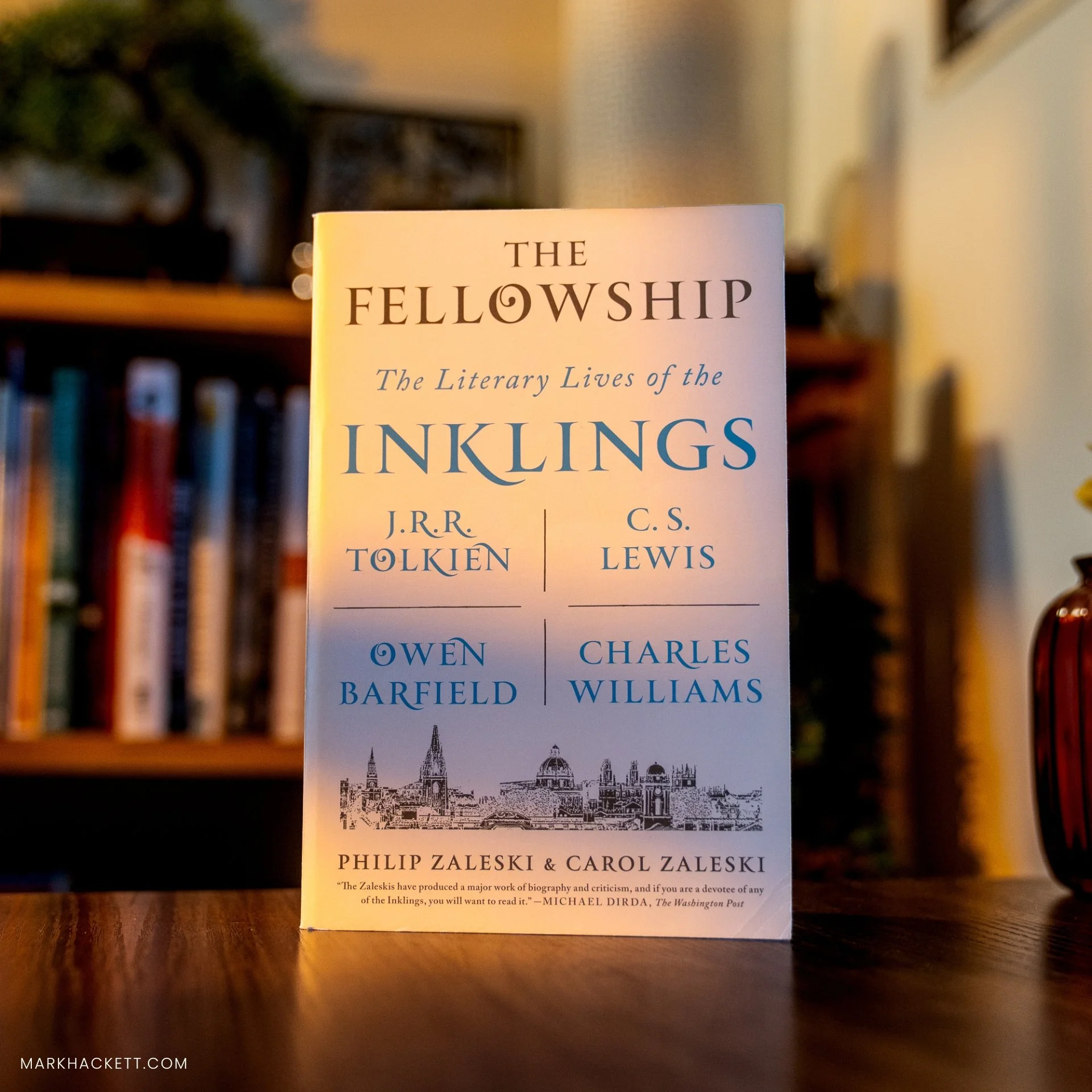
The Fellowship: The Literary Lives of the Inklings by Philip and Carol Zaleski
C. S. Lewis is the twentieth century's most widely read Christian writer and J.R.R. Tolkien its most beloved mythmaker. For three decades, they and their closest associates formed a literary club known as the Inklings, which met every week in Lewis's Oxford rooms and in nearby pubs. They discussed literature, religion, and ideas; read aloud from works in progress; took philosophical rambles in woods and fields; gave one another companionship and criticism; and, in the process, rewrote the cultural history of modern times.
Philip and Carol Zaleski offer the first complete rendering of the Inklings' lives and works in this book. The result is an extraordinary account of the ideas, affections, and vexations that drove the group's most significant members. C. S. Lewis accepts Jesus Christ while riding in the sidecar of his brother's motorcycle, maps the medieval and Renaissance mind, becomes a world-famous evangelist and moral satirist, and creates new forms of religiously attuned fiction while wrestling with personal crises. J.R.R. Tolkien transmutes an invented mythology into gripping story in The Lord of the Rings, while conducting groundbreaking Old English scholarship and elucidating, for family and friends, the Catholic teachings at the heart of his vision. Owen Barfield, a philosopher for whom language is the key to all mysteries, becomes Lewis's favorite sparring partner, and, for a time, Saul Bellow's chosen guru. And Charles Williams, poet, author of "supernatural shockers," and strange acolyte of romantic love, turns his everyday life into a mystical pageant.
Romantics who scorned rebellion, fantasists who prized reality, wartime writers who believed in hope, Christians with cosmic reach, the Inklings sought to revitalize literature and faith in the twentieth century's darkest years-and did so in dazzling style.
J.R.R. Tolkien's Sanctifying Myth: Understanding Middle Earth by Bradley J. Birzer (purchase)
The Letters of J.R.R. Tolkien by J.R.R. Tolkien, Humphrey Carpenter, and Christopher Tolkien (purchase)
The Making of Middle-earth: The Worlds of Tolkien and The Lord of the Rings by Christopher A. Snyder (purchase)
What's Next: A Backstage Pass to The West Wing, Its Cast and Crew, and Its Enduring Legacy of Service by Melissa Fitzgerald and Mary McCormack (purchase)
Letters & Papers From Prison by Dietrich Bonhoeffer (purchase)
Of Other Worlds: Essays and Stories by C.S. Lewis (purchase)
Present Concerns: Journalistic Essays by C.S. Lewis (purchase)
Fiction
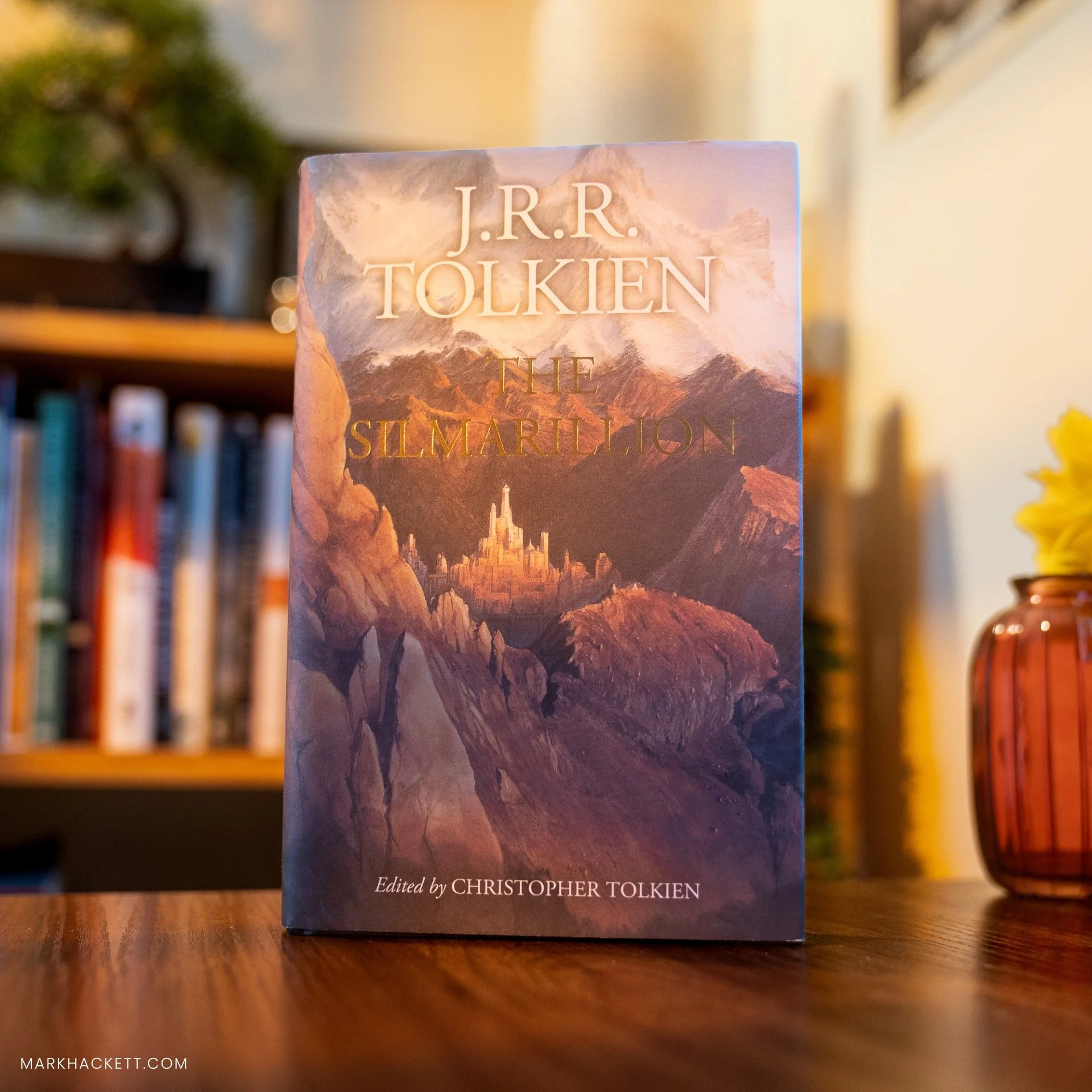
The Silmarillion by J.R.R. Tolkien and Christopher Tolkien (re-read)
The story of the creation of the world and of the First Age, this is the ancient drama to which the characters in The Lord of the Rings look back and in whose events some of them, such as Elrond and Galadriel, took part.
The three Silmarils were jewels created by Fëanor, most gifted of the Elves. Within them was imprisoned the Light of the Two Trees of Valinor before the Trees themselves were destroyed by Morgoth, the first Dark Lord. Thereafter, the unsullied Light of Valinor lived on only in the Silmarils, but they were seized by Morgoth and set in his crown, which was guarded in the impenetrable fortress of Angband in the north of Middle-earth.
The Silmarillion is the history of the rebellion of Fëanor and his kindred against the gods, their exile from Valinor and return to Middle-earth, and their war, hopeless despite all their heroism, against the great Enemy. I love everything in Tolkien’s legendarium, and The Silmarillion is my favorite.
The Fall of Númenor by J.R.R. Tolkien and Brian Sibley (purchase)
The Fall of Gondolin by J.R.R. Tolkien and Christopher Tolkien (purchase)
Unfinished Tales of Númenor and Middle-earth by J.R.R. Tolkien and Christopher Tolkien (purchase)
The Book of Lost Tales, Part One by J.R.R. Tolkien and Christopher Tolkien (purchase)
The Book of Lost Tales, Part Two by J.R.R. Tolkien and Christopher Tolkien (purchase)
The Space Trilogy: Out of the Silent Planet (re-read) (purchase)
The Space Trilogy: Perelandra (re-read) (purchase)
The Space Trilogy: That Hideous Strength by C.S. Lewis (re-read) (purchase)
The Order of the Day by Éric Vuillard (purchase)
The Man in the High Castle by Philip K. Dick (purchase)
Contact by Carl Sagan (purchase)
Sunrise on the Reaping by Suzanne Collins (purchase)
An Artist of the Floating World by Kazuo Ishiguro (purchase)
The Lives of Saints by Leigh Bardugo (purchase)

About Me
I explore faith, church culture, and formation in the American South from my hometown of Memphis, TN. I’m an institutionalist who believes the means are just as important as the ends. Everything on this site is an expression of my faith and love for the Church.
Never miss an article by signing up for my newsletter and subscribing to the podcast. You can also become a member or leave a tip to help keep everything free and open to all.